
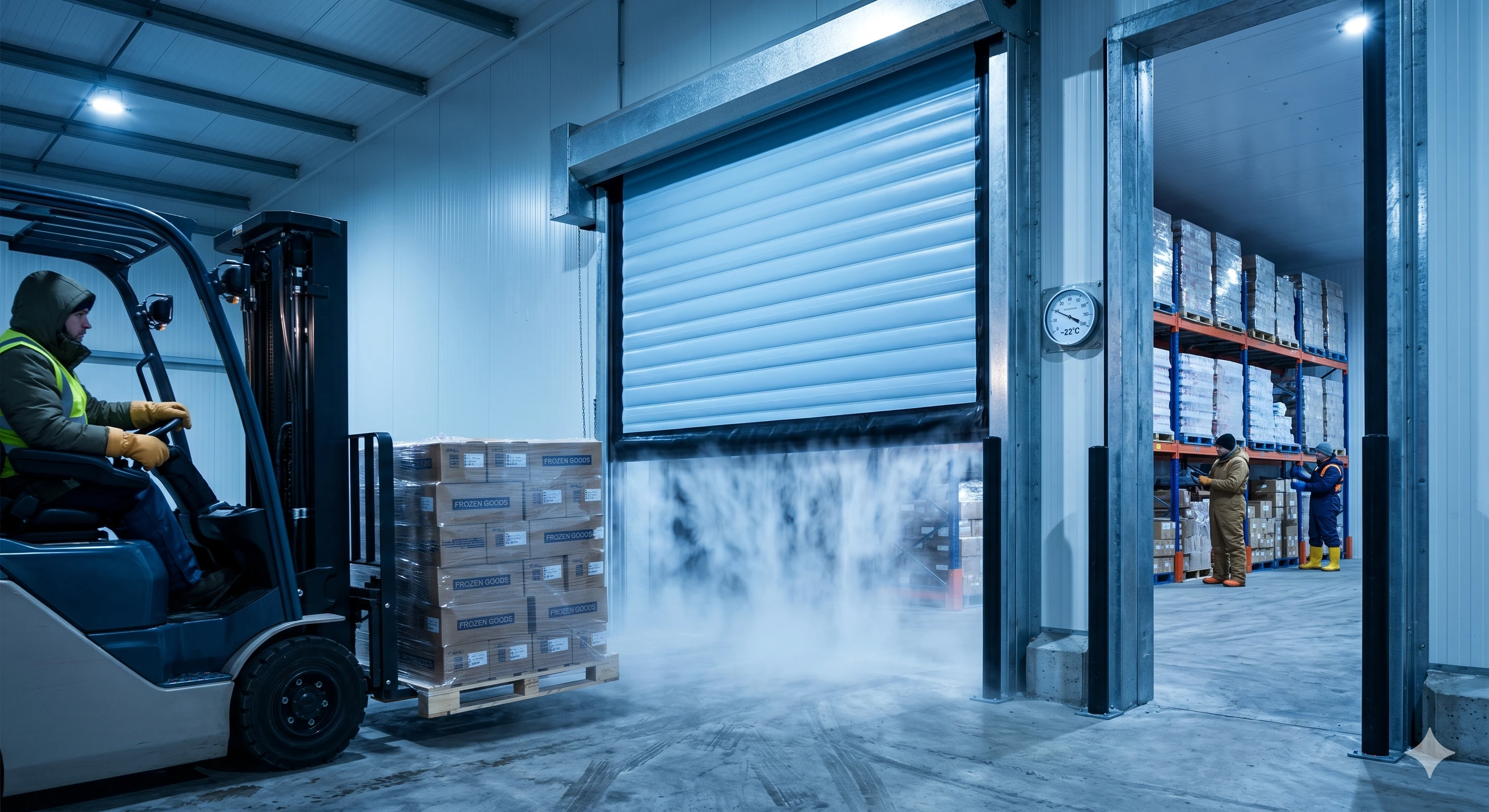
Energy costs represent between 40% and 60% of total operating expenses in a cold storage facility. This isn't a surprise to most cold chain operators — but what often is a surprise is where those costs are being generated. The compressors and refrigeration equipment get the most attention, and rightly so. But the one factor that determines how hard those compressors work is one that most facility managers overlook entirely: the time your doors are open.
Every time a forklift passes through a cold room entry with a conventional door, the door must open, the vehicle passes through, and the door must close. With a standard industrial swinging or rolling door, this cycle takes between 15 and 45 seconds in a refrigerated environment — and for every one of those seconds, warm ambient air is flowing in and conditioned cold air is flowing out. Do this 150 times a day, and you're looking at the equivalent of leaving a cold room door open for anywhere from 37 to 112 minutes daily.
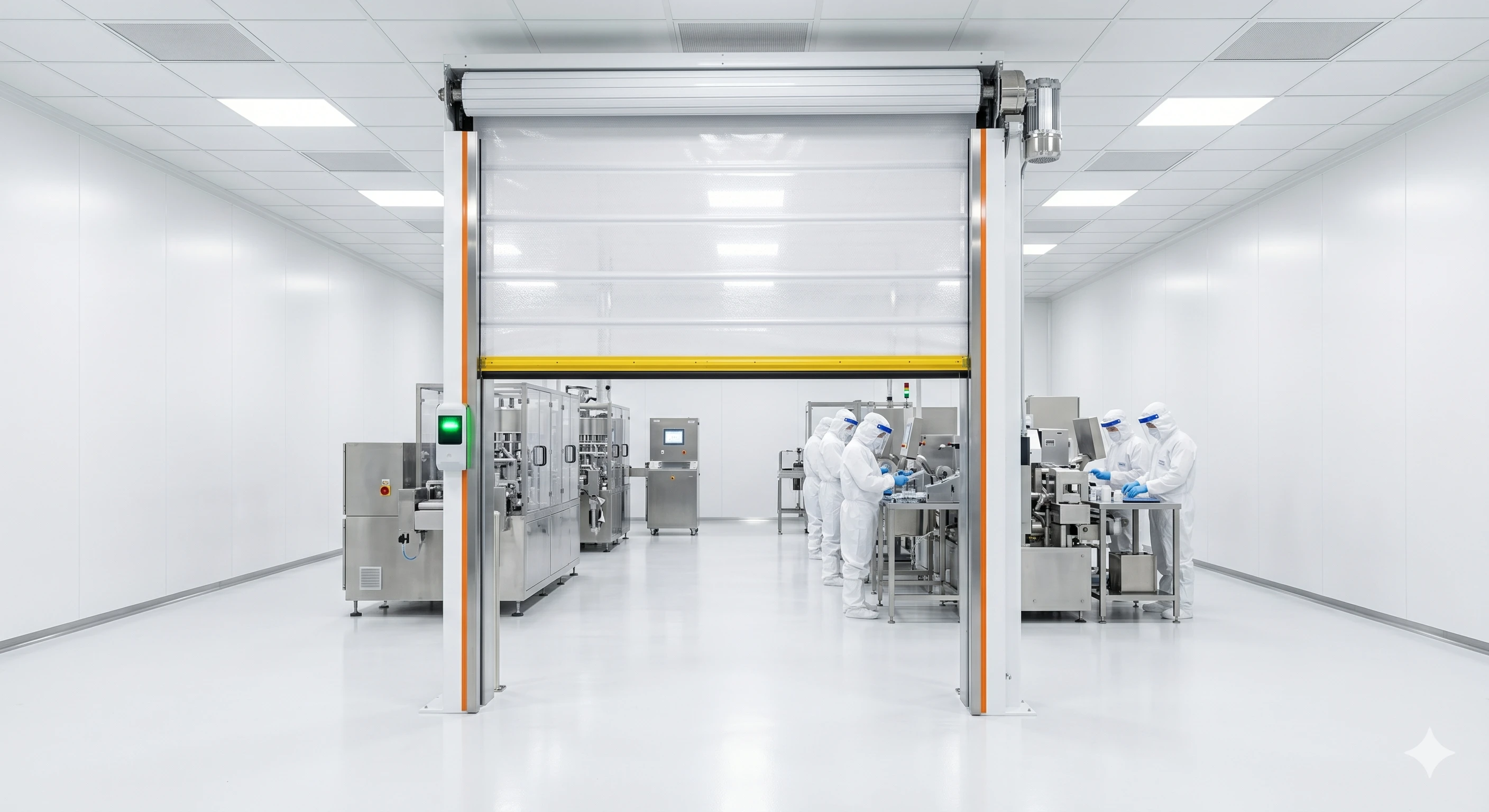
High Speed Doors change the physics of this problem. By operating at 2.0–3.0 m/s (compared to a conventional door's 0.1–0.15 m/s), they reduce the open window from 15–45 seconds to 4–6 seconds. For a facility with 150 forklift passes per day, that's the difference between 112 minutes of open time and 15 minutes. The compressor load reduction from this single change is measurable, significant, and permanent.
The Numbers: What One Door Opening Costs You
Let's build the calculation for a medium-sized cold storage facility operating at -18°C (frozen storage), with 200 forklift passes per day through a single door opening. Assume an ambient temperature of 32°C — typical for Rajasthan and Gujarat during summer months.
With a High Speed Door running at 2.5 m/s, the same opening takes 3.8 seconds rather than 24 seconds. Conditioned air loss drops by approximately 84%. The same calculation applied to a High Speed Door yields an annual energy cost of roughly ₹27,000 per door — a saving of ₹1,42,000 per door per year.
For a facility with six door openings serving a frozen storage area, that's an annual saving in the range of ₹8.5 lakh — every year, permanently, from the day the doors are commissioned.
How High Speed Doors Change the Math
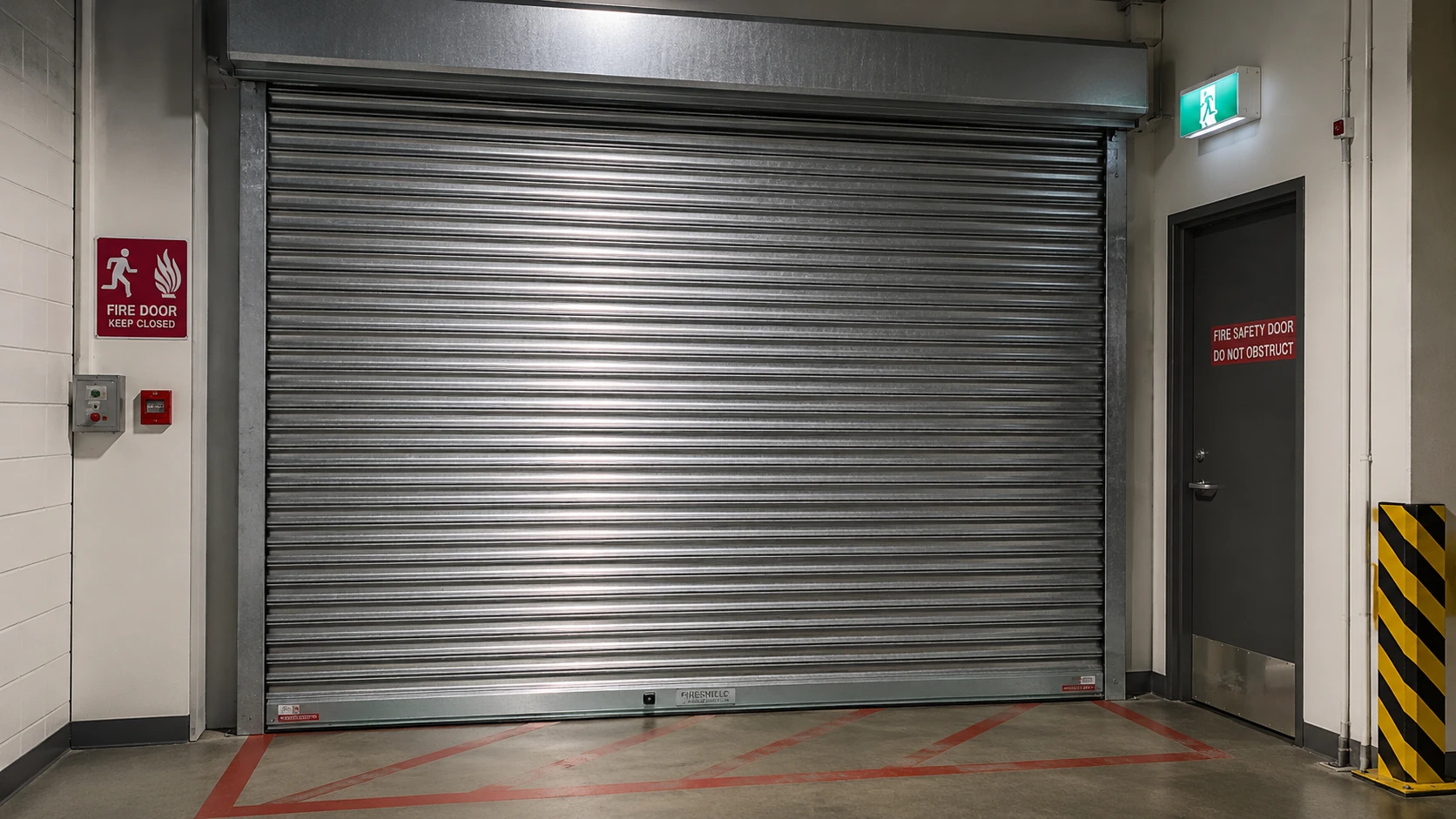
The speed advantage is only part of the story. High Speed Doors also change the math through tighter sealing. A conventional rolling shutter or hinged door has substantial air gaps at the sides, top, and bottom when closed — these gaps allow infiltration of warm air even when the door isn't operating. A properly specified High Speed Door uses brush seals or inflatable seals at all four sides of the door frame, combined with a reinforced bottom edge seal that contacts the floor surface. This reduces standing infiltration by 60–70% compared to a standard rolling shutter.
| Metric | Conventional Door | High Speed Door (HSD) |
|---|---|---|
| Operating speed | 0.10–0.15 m/s | 2.0–3.0 m/s |
| Cycle time (3.6m height) | 24–36 seconds | 3.5–6 seconds |
| Door-open time (200 passes/day) | 80–120 min/day | 12–20 min/day |
| Side/bottom seal quality | Standard (significant gaps) | Brush or inflatable seal |
| Standing infiltration | High (when closed) | 60–70% lower |
| Crash recovery | Manual re-hang (hours) | Automatic (under 20 sec) |
| Estimated annual energy cost (per door, 200 passes/day, -18°C) | ₹1.65–1.80 lakh | ₹25,000–35,000 |
Real Installation Data from Our Projects
The numbers above are theoretical — so let's look at real project data from our installations. Asahi India Glass's Faridabad cold storage facility had six conventional hinged doors on their refrigerated warehouse zones. The facility operates two shifts, with approximately 280 forklift passes per day distributed across the six doors.
Prior to the HSD installation, Asahi's facility manager had measured the approximate energy consumption of the cold storage section at 3,800–4,100 kWh/day during summer months. Following the installation of six Yadav Automation transparent High Speed Doors (operating at 2.5 m/s), an independent energy audit conducted at the 90-day mark measured consumption at 2,280–2,460 kWh/day — a reduction of approximately 40% in the cold storage section's daily energy draw.
It's worth noting that the 40% reduction in Asahi's case includes the benefit of the transparent panel specification — operators can see through the door, which means they don't open it unnecessarily to check the other side. This behavioral effect typically reduces cycles by 8–12% in facilities where door-openings for visual inspection are common.
Choosing the Right High Speed Door for Cold Storage
Not all High Speed Doors are equally suited to cold chain environments. The two main door types for cold storage are transparent roll-up doors and solid-panel roll-up doors, each with distinct trade-offs.
Transparent High Speed Doors
Transparent panels (typically PVC with a clear window panel) offer the key advantage of visibility. Operators can see through the door, which prevents collisions and reduces unnecessary cycle activations. The thermal performance is slightly lower than solid-panel doors, but in refrigerated (0–8°C) environments, this difference is marginal. Transparent doors are the right choice for most refrigerated storage applications where forklifts are frequent and operator visibility is valued.
Solid Panel / Insulated High Speed Doors
For frozen storage (-18°C and below), a solid panel door with polyurethane foam core insulation provides superior thermal performance. The insulated panel reduces radiant heat transfer through the door surface, which adds to the energy efficiency picture. The trade-off is the loss of transparency — this must be compensated by safety sensors (radar or presence sensors) at the door threshold to prevent forklift-door collisions.
Installation Checklist: What to Verify Before Your HSD Goes In
A poorly specified or incorrectly installed High Speed Door will underperform regardless of its nominal operating speed. Before your installation, your contractor should verify all of the following:
- Opening dimensions confirmed: Actual clear width and height measured, not assumed from architectural drawings. Even 20mm discrepancy in a cold room environment can affect seal performance.
- Structural lintel capacity assessed: HSD header box and motor assembly can weigh 80–180 kg depending on door width. The lintel above the opening must be capable of supporting this load without deflection.
- Floor condition checked: The bottom seal makes contact with the floor on closure. Uneven or damaged floors must be repaired before installation to ensure the seal functions correctly.
- Electrical supply specified: Most HSD motors require a 3-phase 415V supply with an MCB of appropriate rating. Confirm power availability at the door location before finalizing the installation date.
- Safety sensor type selected: Radar sensors (no physical contact required to trigger door) are preferred for forklift environments. Infrared loop detectors require floor-mounted loops that can be damaged by forklift traffic.
- PLC/BMS integration scope agreed: If the door is to be integrated with an existing automation system, the communication protocol (Modbus, Profibus, digital I/O) must be specified and agreed before manufacturing begins.
- Cold break addressed at frame: In frozen storage environments, the steel frame of the door can act as a thermal bridge. Specify a polyamide thermal break in the frame profile to prevent condensation and ice formation.
- AMC terms confirmed: Agree on the Annual Maintenance Contract terms at point of purchase. A well-maintained HSD should achieve 99%+ uptime. An unmaintained one will develop seal wear and motor faults within 18–24 months.
What Does It Cost?
High Speed Door pricing depends on width, height, operating speed, panel type, seal specification, and control system complexity. Below is a guide price range for standard configurations, based on our current production costs and typical project scopes as of Q2 2024.
| Configuration | Typical Width × Height | Operating Speed | Guide Price (Supply + Install) |
|---|---|---|---|
| Standard Roll-Up HSD (transparent) | Up to 3m × 3m | 2.0 m/s | ₹2.5 – 3.2 lakh |
| Standard Roll-Up HSD (transparent) | Up to 4m × 4m | 2.2 m/s | ₹3.2 – 4.0 lakh |
| Cold Storage HSD (solid, insulated) | Up to 3.6m × 4m | 2.5 m/s | ₹3.8 – 4.8 lakh |
| High Speed HSD with PLC integration | Up to 4m × 5m | 2.5–3.0 m/s | ₹4.5 – 6.0 lakh |
| Custom HSD (blast freeze / extreme spec) | Custom | As specified | ₹6.0 lakh+ |
Prices above exclude GST. AMC pricing (recommended) is typically 5–8% of supply value per year, covering quarterly preventive maintenance visits, seal replacement, and emergency call-out within 24–48 hours.
At a ₹3.5 lakh installed cost and ₹1.4 lakh in annual energy savings per door, the payback period for a standard cold storage HSD is comfortably under 30 months for a facility running 200 cycles per day — and often as low as 14 months for high-cycle frozen storage environments.
Get a Free Energy Audit for Your Cold Storage Facility
Our engineering team will visit your facility, measure your current door cycle times, and calculate the actual energy cost of your existing entrance setup — at no charge. We'll present you with a project proposal that includes the payback calculation before you commit to anything.
Request Free Energy Audit — WhatsApp